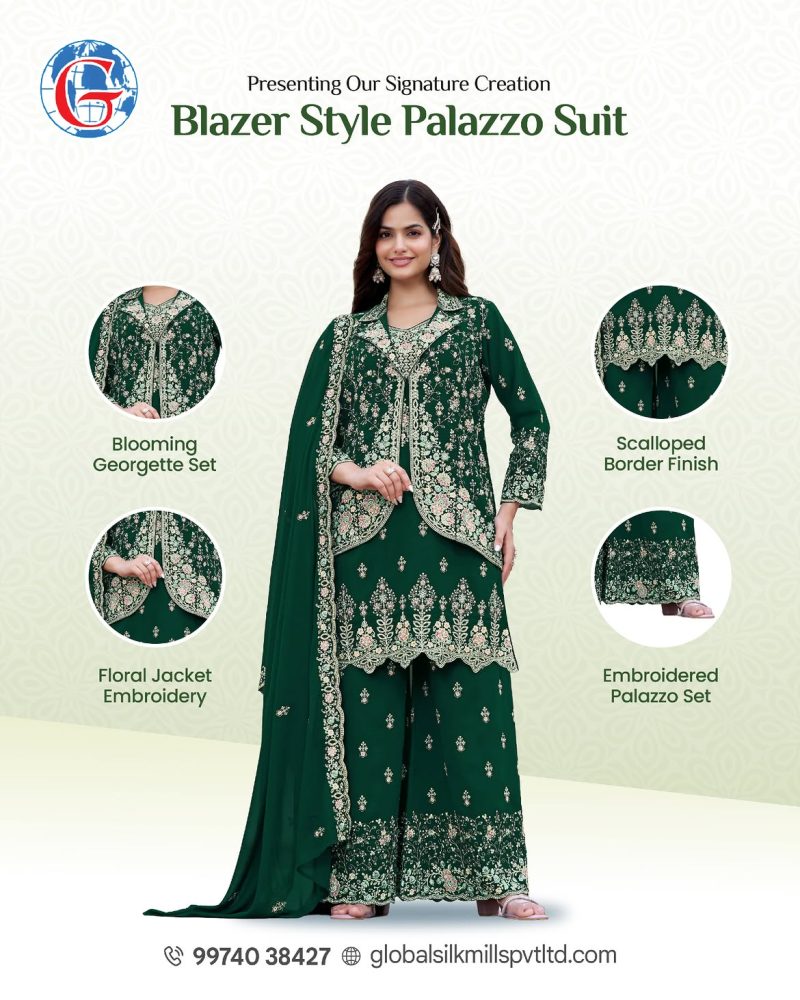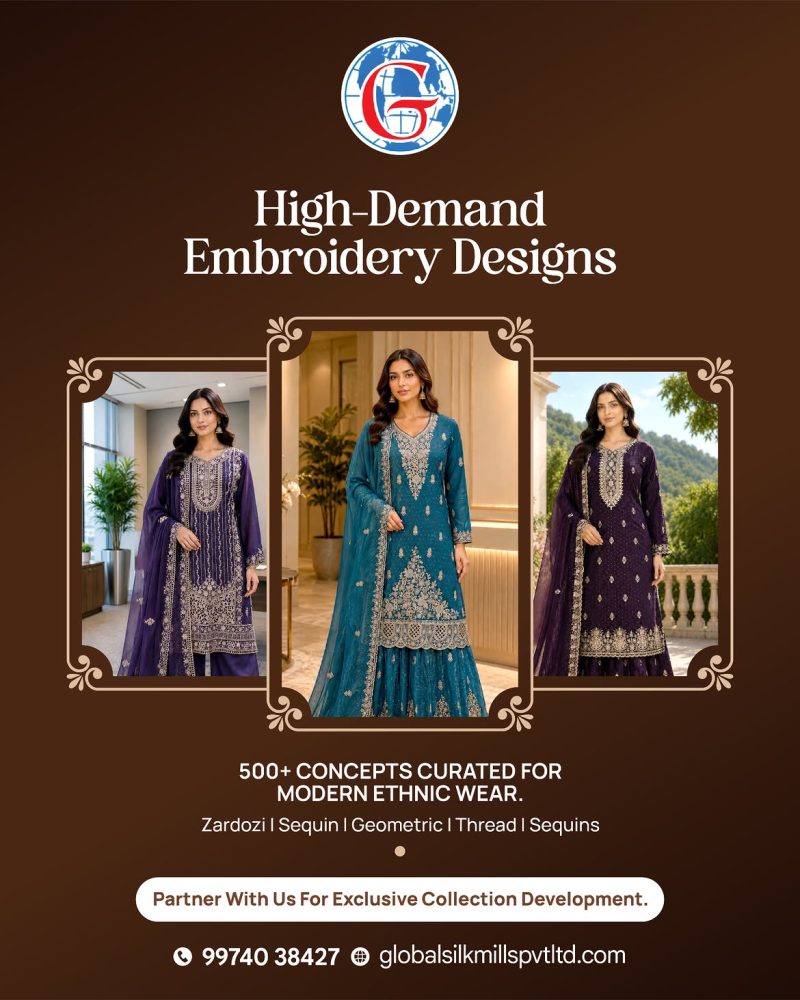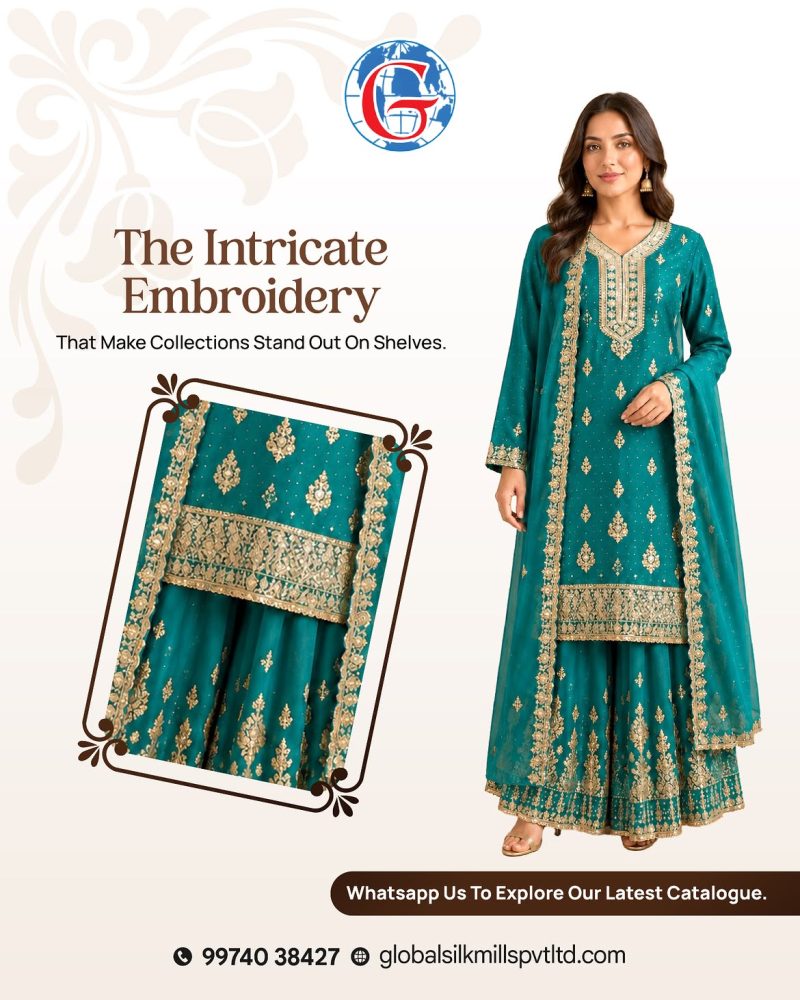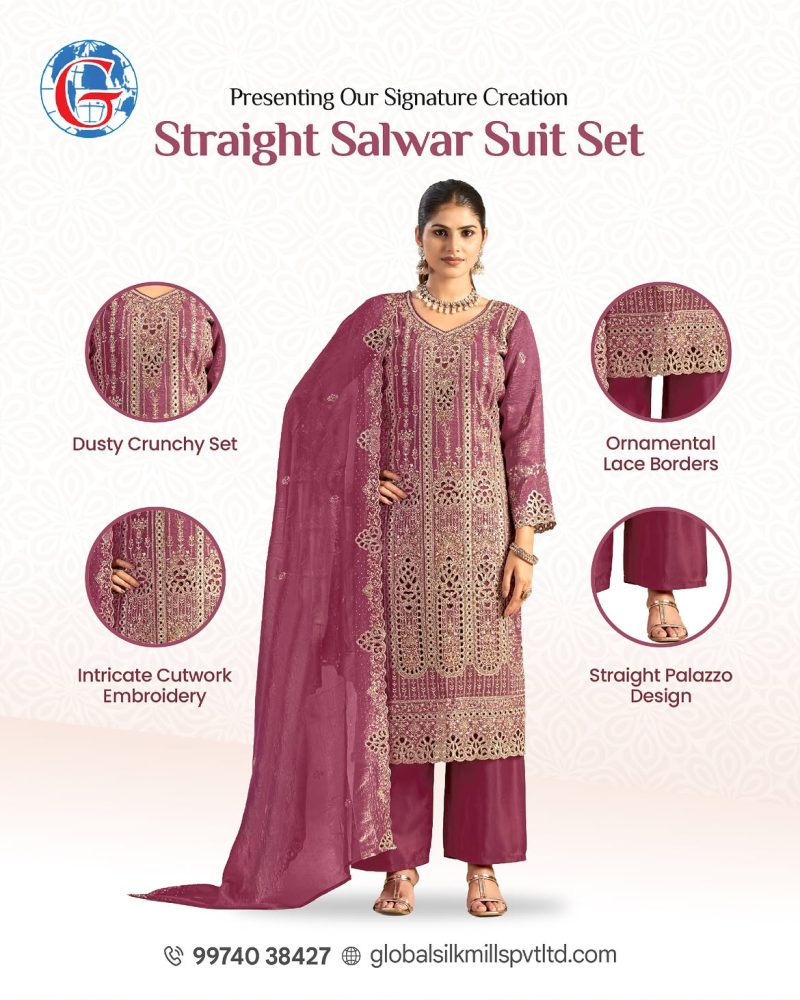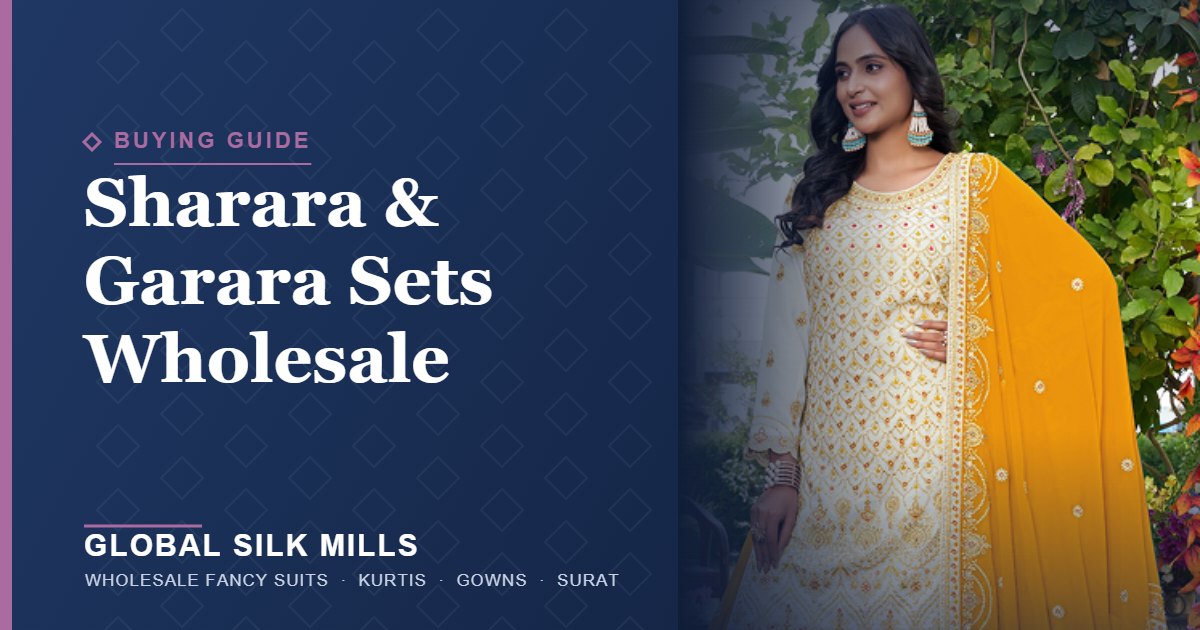
Sharara and garara sets are among the most in-demand occasion wear in India — weddings, Eid and festive seasons drive consistent volume, and the higher work content means stronger margins. But these are detail-heavy garments, so knowing what to inspect before a bulk order protects you from costly returns.
Sharara vs garara: know the difference
- Sharara — wide, flared trousers from the waist, paired with a kurti or short top and dupatta.
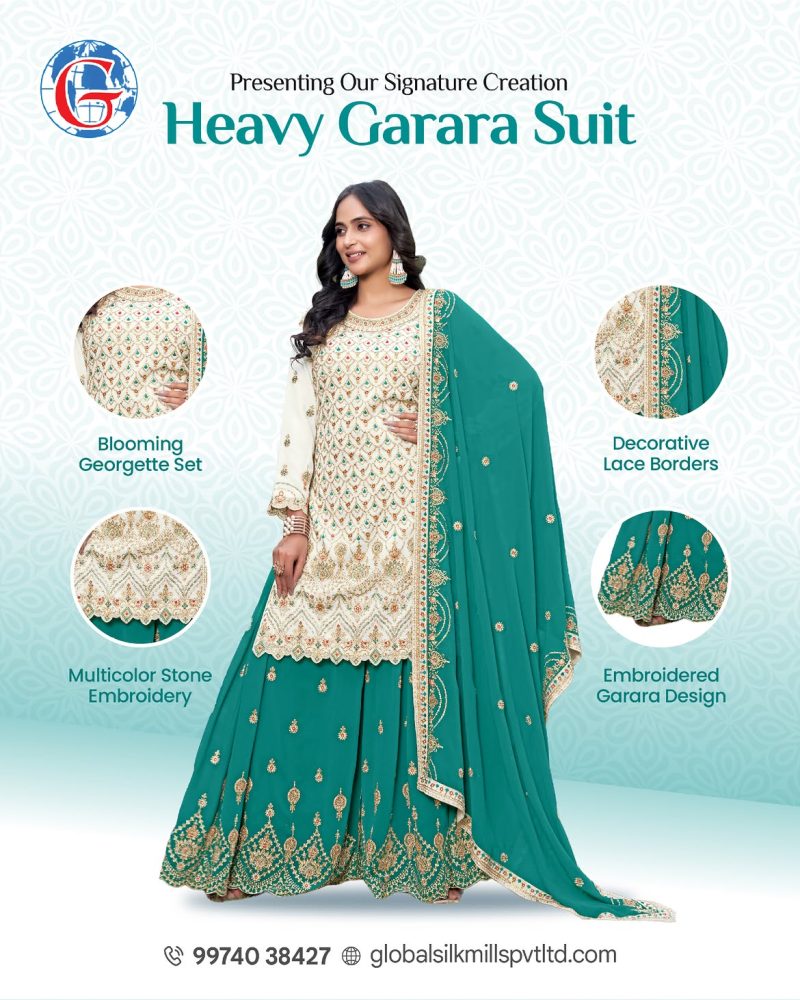
- Garara — fitted to the knee then dramatically flared below with a distinct joint, often heavily worked; a higher-ticket, more ornate piece.
Where quality shows
- Stitching at the flare and the garara knee joint — the most common failure point.
- Waistband construction and elastic or drawstring quality.
- Work consistency — embroidery and sequins even across the set.
- Dupatta and top finishing — a set is judged as a whole.
Checklist before a bulk order
- Approve a sample — work-heavy sets vary most between sample and bulk.
- MOQ per design and colour, in writing.
- Dye-lot and work consistency across the run.
- Lead times — these peak hard in wedding and festive windows.
- Customisation and private labelling if building your own range.
- GST invoicing for input credit.
Frequently asked questions
What is the difference between sharara and garara?
Sharara flares from the waist; garara is fitted to the knee then flares below with a visible joint, and is typically more ornate.
What is the MOQ for wholesale sharara and garara sets?
It is usually set per design and colour and varies by manufacturer. Confirm the minimum in writing before ordering.
Can these sets be customised or private-labelled?
Yes — many manufacturers offer customisation and private labelling for bulk buyers. Confirm details before your first order.